
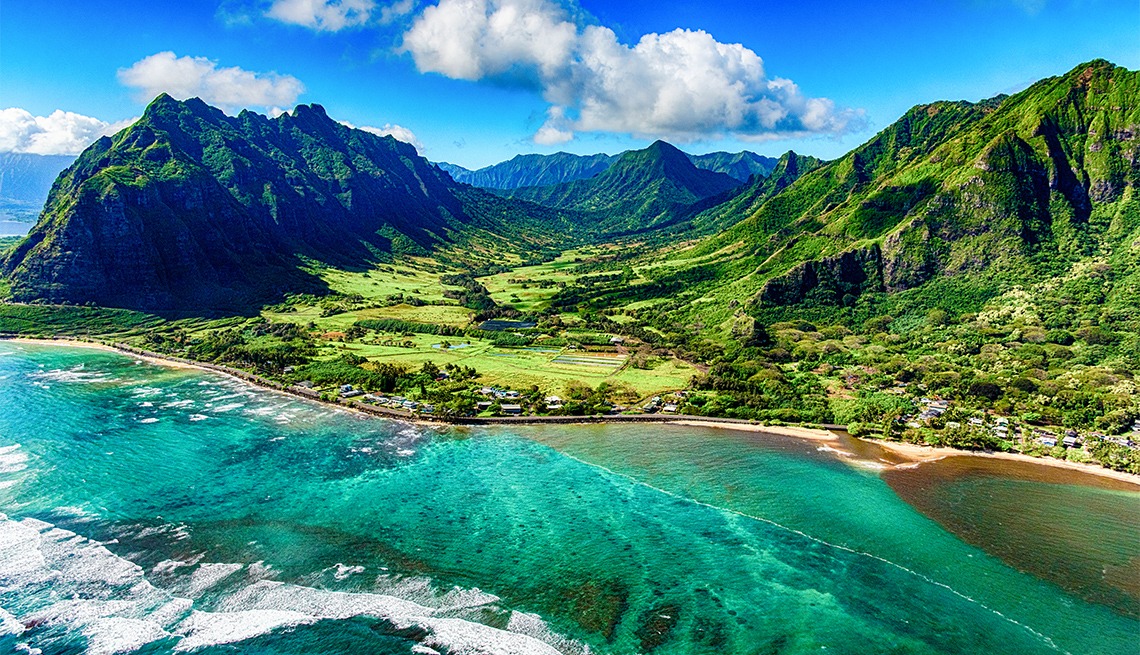
The Hawaiian Islands are notorious for their cinematic vacations: Gleaming azure waters, a sun that seems larger and brighter than anywhere else in the world, and their deep, rich culture make it a dream relaxation destination for many, especially in the United States. “[Hawaii’s] the most tropical place I can go to that’s not super far,” Said six-time Maui tourist Becca Tomac, “It’s still a beach city, but it’s very different from California– It’s more tropical, and also really peaceful.”
However, Hawaii wasn’t always famous for its tourism; It only truly exploded when the islands became the 50th state in 1959. Hawaii has a long, long history from before it became a self-acclaimed paradise.
Hawaii’s story begins all the way back in the late 18th century, when explorer James Cook first came across the island chain on his famous voyage. Though Cook would die in a violent skirmish with the islands’ natives, his voyage would mark the beginning of the world’s interest in the Hawaiian Islands. Numerous publications about Cook’s grand voyage interested European and American fishers, farmers, and whalers, who saw the island chain as a convenient base of operations for their massive companies. Hawaii’s population would begin to boom as the United States set up whaling stations and, most famously, sugar plantations on the island.
After establishing a foothold in Hawaii, President William McKinley would start attempting to incorporate Hawaii as a U.S. territory (similar to how Puerto Rico is today). The Spanish-American War had just broken out, and the United States’ military leaders desperately wanted control of Pearl Harbor to project naval power across the Pacific Ocean. Hawaii was officially annexed with the signing of the Newlands Resolution on July 7, 1898, leading to further population growth as even more farmers settled sugar plantations on the islands.
Around this same time, Hawaii’s tourism began to slowly grow. The construction of the first luxury hotel (there was a hotel before this, but it sat on the rim of the volcano Kilauea), named the Moana, was completed in 1901, and tourism on the islands was encouraged by the Hawaiian Promotion Committee. Part of this may have also been due to Jack London’s visit to the islands, where he and his wife sailed across the Pacific to the island of Maui. He would catalog his trip in his 1911 novel The Cruise of the Snark. Though interest in Hawaii was growing, it was still relatively small– Only 22,000 people visited the islands in 1929.
Hawaii would begin to boom after the Second World War; With the invention of jet airplanes, and Hawaii’s rise to statehood in 1959, the islands’ signature blue waters would fill the dreams of many looking for a close-by vacation getaway. “I really love to surf there,” Said CdMHS junior Chloe Freehan, who’s been to the island of Honolulu four times, “The water is so warm and clear, and the waves are perfect every time.” Tourism had become Hawaii’s largest industry by the 1950s, and the islands surpassed 1 million annual visitors in 1967. Today, the islands receive ten times this number of visitors; More than 10 million tourists visit Hawaii annually.
Hawaii’s booming tourism industry had its negative side effects, however. For one, the boom had a massive environmental impact. The tourism industry introduced a massive amount of pollution, spiked water usage (studies show that a single tourist uses up to 2,000 liters of water per day), leading to droughts, and destroyed the environments of a variety of local species (approximately 60% of all native Hawaiian species are marked as endangered). Additionally, the spikes in tourism led to a suppression of native Hawaiian culture; The islands, to most tourists, were far more interesting for their beaches than their history and traditions. As a result, ancient culture and traditions were stamped out, replaced with towering hotels and tourist attractions.
In the end, Hawaii’s giant tourism industry spawned from a mix of historic expeditions, its convenient location (both for tourists and the U.S. Military), and advancements in technology that enabled easy transport. With all this, it’s no wonder that Hawaii’s glistening cyan waters, tropical weather, and luxurious resorts make it one of the greatest vacation spots across the globe.