

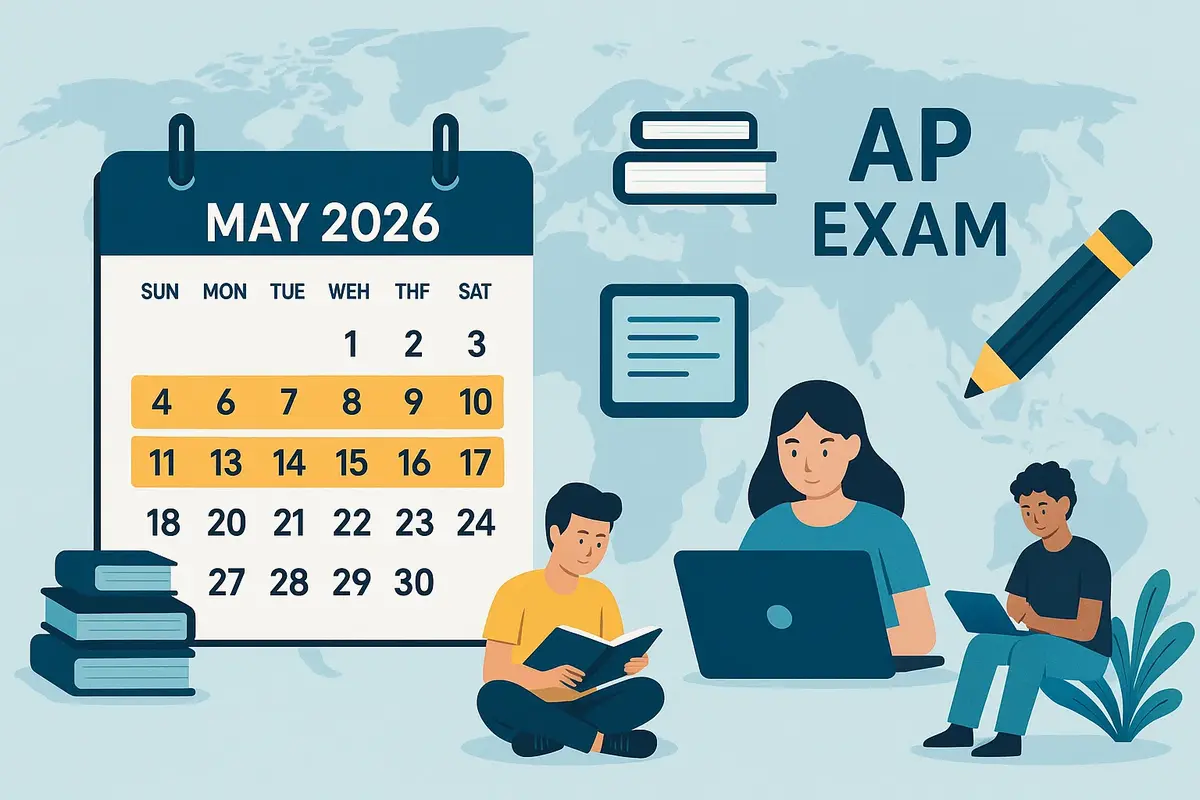
In the dead of winter, as CdM’s student body struggles to get out of a haze from Winter Break, the furthest thing from students’ minds is their AP exams. Rightfully so—May is months away, and students are attempting to even reach Friday. But according to The Princeton Review, “AP Exams take about two to three months of preparation to maximize success. Therefore, it is recommended that you start preparations for the AP Exams in February or March. By this time, you should have mastered most of the content and skills necessary for the exam.” To reduce anxiety and ensure a good score, preparing months before the exam will solidify your chances of success on your exam.
Studying months before an exam doesn’t necessarily mean hours upon hours of endless slaving away at the library for weeks—it means a little progress every day accumulates to large improvements, even if that means a few practice questions every day. Senior Jillian Kaufman, who has taken multiple AP classes, says, “To prepare for my AP exams, I always take good notes throughout the year, so I have something to refer back to. I also always like to do my homework on my iPad; I have a note-taking app called Notability, so that I can then go back and have a big record of everything that I’ve learned the whole year.” When it comes to efficiently spacing out her time, Kaufman explains how she spends most of her time studying for the weeks coming up to spring break. “If I’m taking a really hard class or one I have to self-study for, I’ll focus on my weaknesses in that subject and tackle them. I try to compile all the notes that I’ve taken throughout the year and also everything that I’ve learned,” comments Kaufman. Kaufman also emphasizes focusing on the exams that are earliest during the two weeks of testing, and prioritizing those subjects. To space out her studying time evenly, Kaufman states she makes a to-do list every day leading up to exam week. “I’ll try to designate my week out, or sometimes I’ll write it out in my planner; e.g., on Monday, I’ll write ‘I want to study this class’, and another day, I’ll study another class, and it helps me get organized.” On resources she uses, Kaufman states, “I use AP Classroom as a big resource: looking through the daily videos and the progress checks, and just trying to stay on top of all the topics that I don’t know.” The night before the AP exam, Kaufman recommends getting in eight hours of sleep, as opposed to pulling an all-nighter. “It gets to the point where, like, if you’ve studied enough, and it’s the last night before your exam, studying really late is not going to help you. Sleep will help you more just to stay healthy and make sure your brain is working during the exam,” comments Kaufman.
To succeed on your exams and reduce anxiety, a little bit of progress every day will add up to huge improvements and changes when it comes to your skill sets in a subject. Space out your time, be efficient, and don’t procrastinate—by doing this, you will crush your AP exams!