
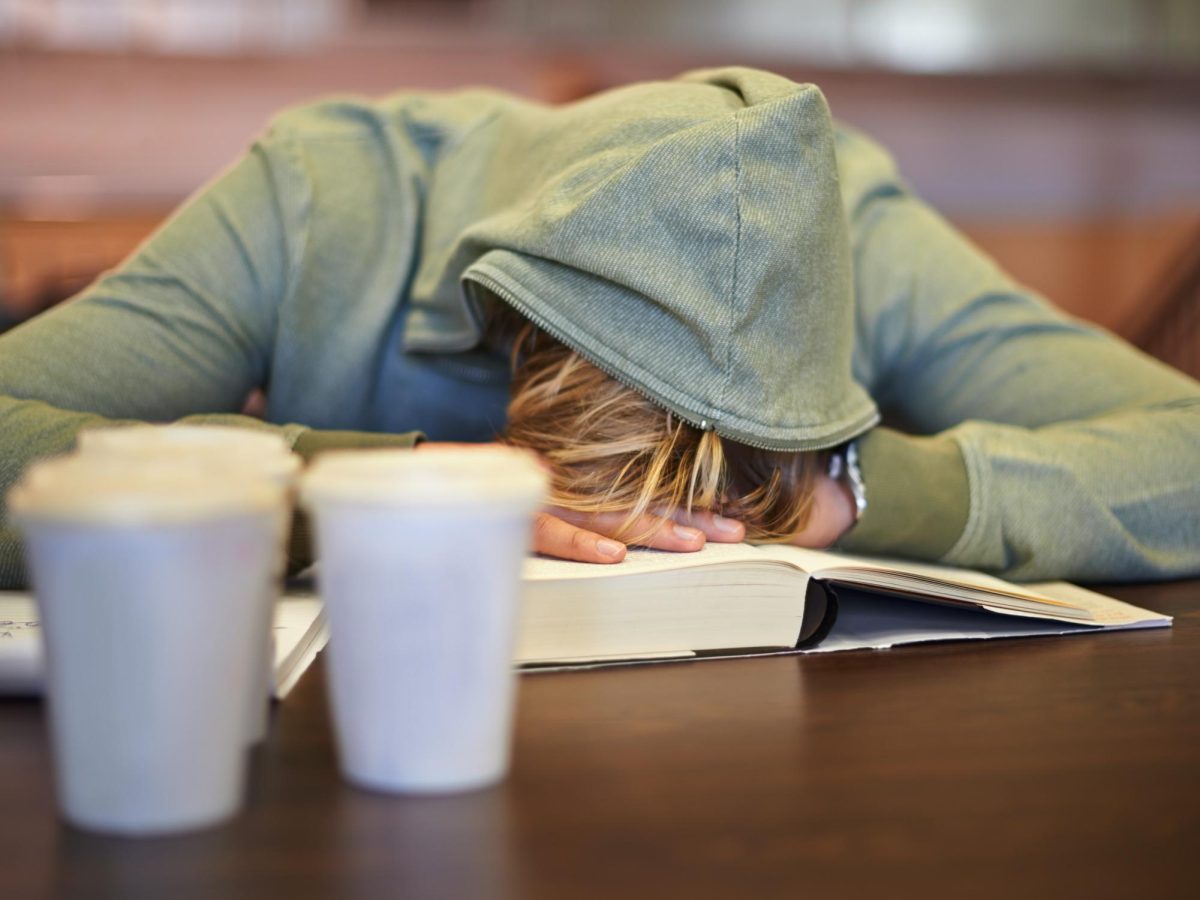
Before first period even begins, exhaustion is already the most common thing on campus. Students slump at their desks with energy drinks on the table. What used to have an occasional rough morning has quietly turned into a daily reality for teens everywhere. Exhaustion is a real problem, and it affects everything from grades to mood to overall health. What most people don’t realize is that teen tiredness isn’t about bad habits. It is biology. During adolescence, the brain’s internal clock naturally shifts later. Meaning that for most teens, feeling sleepy before 11:00 p.m. just isn’t realistic. It isn’t a choice, it’s how the brain develops.
Some schools’ early start times force teens to wake up at hours their bodies treat as the middle of the night. So even if someone goes to bed as early as they can, they are still fighting against their own biology every morning. The impact of this shows up everywhere. It is harder to focus in class. Stress feels heavier. And athletes perform worse. Students feel the effects of this every day. Olivia Fong, a freshman at Corona del Mar High School, states, “Once I’m fully awake, I actually enjoy my classes, but it takes a little time to get there.” Additionally, Harper Smith, a freshman at Corona del Mar High School, declares, “When I’m rested, I do better in every class.”
Schools like CdM that have moved to later start times have seen big improvements in attendance, focus, and overall well-being. Students participate more, teachers notice better engagement, and mornings feel less like a battle and more like a productive start to the day. Students simply function better when their schedules match their biology. The teen sleep crisis isn’t complicated. It’s a mismatch between what science tells us and what the school day demands.